A brief history

To enter the past of Andorra is to enter fully into its culture and traditions. You will realise that it is a country with its own character.

/content/dam/visitandorra/ca/assets/images/coneix-andorra/una-mica-d'història/DSCF6224_20170902_detalls_auvinya.tif


Andorra today

Did you know...? Some interesting facts about the political landscape of andorra

Our special country has even more interesting facts for you. Here are some interesting facts you probably didn’t know about the history and current political landscape of Andorra:

Did you know... that Andorra is one of the few countries in the world with two heads of state? They are the Archbishop of Urgell and the President of the French Republic, and they hold the title of 'co-princes'.

Did you know... that the General Council is considered one of the oldest parliaments in Europe? It stems from the Council of the Earth, constituted in 1419 to resolve the issues of the Andorrans. For more than three centuries (from the 18th century to the year 2011) the Casa de la Vall, in Andorra la Vella was its headquarters. Tourist visits are currently available.

Did you know... that the Andorran Parliament is made up of 28 members, called Councillors and General Councillors? The General Council of Andorra exercises the legislative power in the Principality and consists of a single chamber, with dual national and territorial representation. Members are elected by universal suffrage for a period of 4 years.

Did you know that… Andorra joined the UN in 1993 and that meant official international recognition?

Did you know… Andorra la Vella is the highest capital city in Europe? It stands at 1,023 metres above sea level.

/content/dam/visitandorra/ca/assets/images/coneix-andorra/una-mica-d'història/Mapa_AND-parroquies2 1.jpg

Parishes and Comús

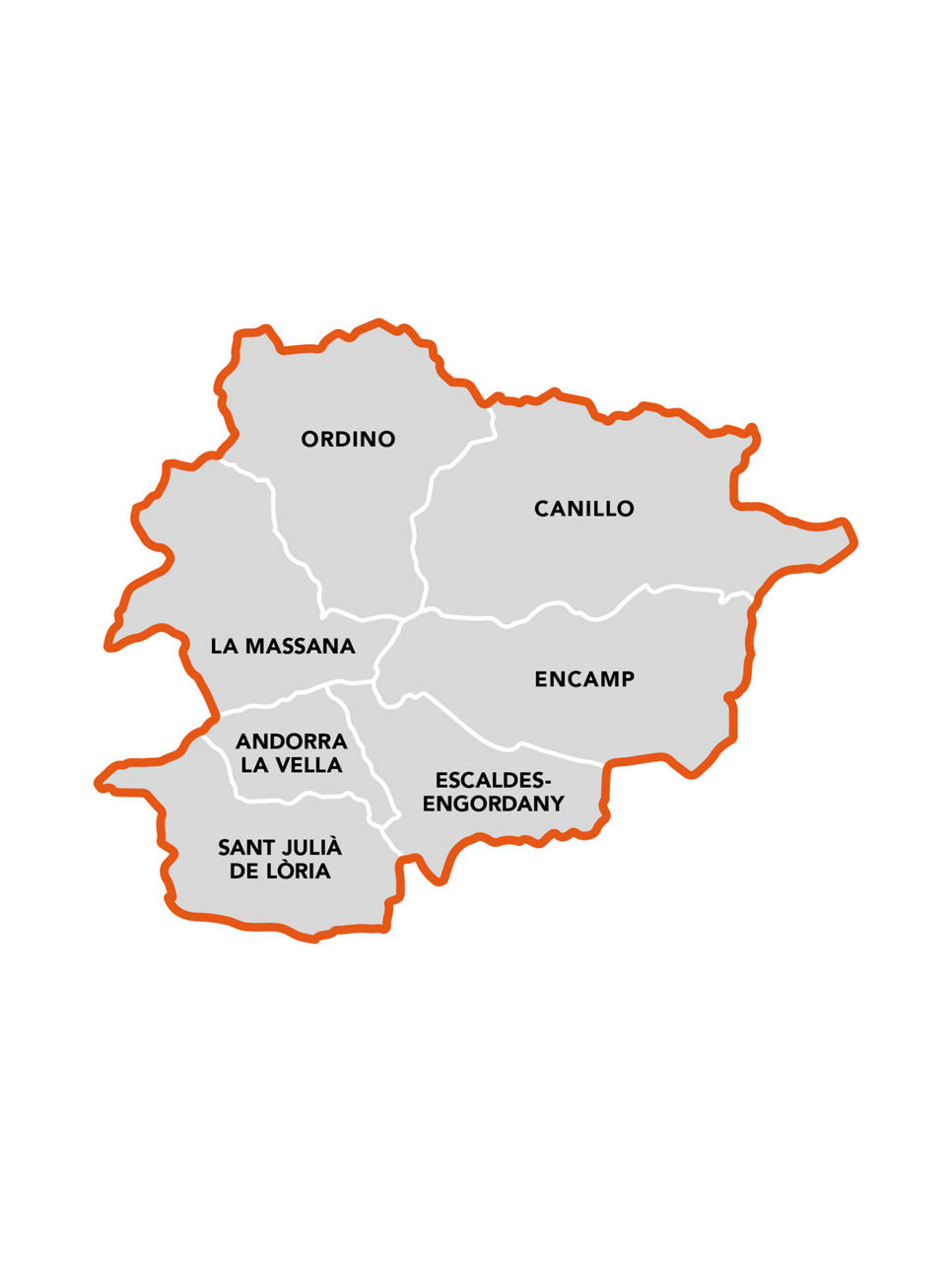
Although it is much smaller than most states, Andorra is split into seven administrative divisions, known as parishes. These are Canillo, Encamp, Ordino, La Massana, Sant Julià de Lòria, Escaldes-Engordany and Andorra la Vella, which is the capital. Each parish has its own consul and administrative headquarters, called the 'Comú'.


Although the country has only seven provinces that are very close together, you would need several hours to visit everything in one day.

/content/dam/visitandorra/ca/assets/images/coneix-andorra/una-mica-d'història/andorraworld-visit-andorra-carolina-de-santis-horitzontal, la massana, pal-_V7A0133.jpg
/content/dam/visitandorra/ca/assets/images/coneix-andorra/una-mica-d'història/auvinya2026.jpg

The history of Andorra, a living legacy

Andorra's history reflects the strength of a country that has managed to maintain its identity over the centuries. From its origins to the present day, it has evolved while maintaining its traditions, institutions and way of life relatively unchanged.


This historical journey has allowed a unique society to develop in the Pyrenees, where respect for the past coexists with a clear adaptation to modern times. The institutions and cultural heritage here are living testimony to this constant evolution.


Today, this legacy remains ever-present in the country's culture and daily life, serving as a reminder that the past is an essential part of its identity and its future.