
Opera

COMBATTIMENTO

CLAUDIO MONTEVERDI

📆​31/05/2026 - 9 p.m.
📍Parc Central (Andorra la Vella)

€30 + admin fees

/content/dam/visitandorra/ca/assets/images/què-fer/cultura/classicand/1920x872_CA26-Header_Combattimento.jpg


In the ring of life, emotions fight ceaselessly

Some 400 years ago, Claudio Monteverdi revolutionised musical language by turning human feeling into true sound theatre. Life and death, light and shadow, love and loss become theatrical material in music that continues to surprise with its modernity.


Based on Il combattimento di Tancredi e Clorinda, stage director Joan Anton Rechi proposes a contemporary reading in the form of a boxing match, where masked characters, inspired by wrestling and the medieval world, transform the conflict of love into a physical and emotional metaphor. This production by the Peralada Festival enters into dialogue with Monteverdi's madrigals to explore relationships as spaces of tension, desire and fragility. Love, when it becomes a struggle, can lead to both revelation and tragedy.


Musically directed by Fausto Nardi and performed by four singers specialising in the composer's repertoire, Combattimento offers an intense stage experience, where music and theatre come together to speak to us, in a timeless voice, about human passions. Monteverdi understood before anyone else that music should serve the text and emotions. That is why, four centuries later, his work continues to challenge us with the same force.


Cast:

Anna Alàs i Jové
Francisco Fernández Rueda
Rocío Martínez Víctor Sordo
Seville Baroque Orchestra
Music director: Fausto Nardi
Stage director: Joan Anton Rechi
Wardrobe: Mercè Paloma
Lighting: Alberto Rodriguez Vega
A Castell de Peralada Festival production


Seville Baroque Orchestra
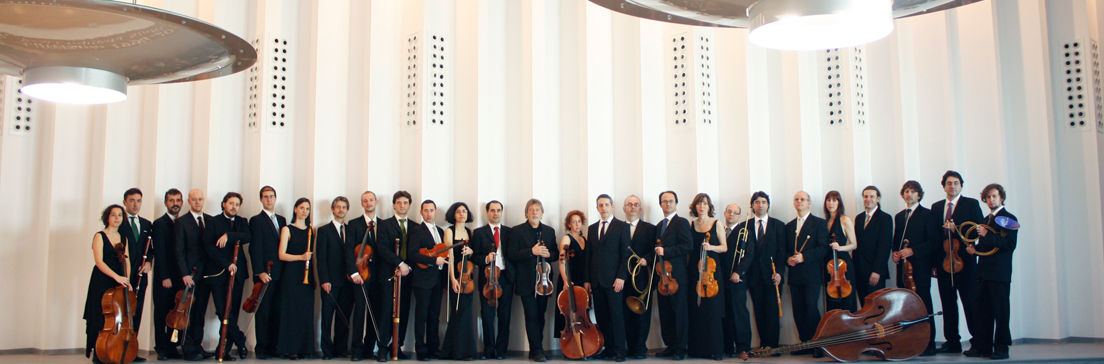
The Seville Baroque Orchestra (OBS), with its 30 years of experience, is undoubtedly among the leading Spanish ensembles dedicated to the performance of early music with historicist criteria. Its artistic activity takes place on the most important stages in Spain and Europe, with a prominent presence in Andalusia and, especially, in Seville, where it maintains a regular concert season.

Since its foundation in 1995, it has worked with top international figures such as Gustav Leonhardt, Christophe Coin, Sigiswald Kuijken, Jordi Savall, Andrea Marcon, Giovanni Antonini, Monica Huggett, Diego Fasolis and Enrico Onofri, among others.

The OBS has recorded an extensive collection of pieces from the Andalusian heritage repertoire under its own label, OBS-Prometeo, in addition to collaborating with record labels such as Harmonia Mundi, Lindoro, Almaviva and, more recently, the Belgian label Passacaille. It has received numerous honours, such as the Editor's Choice from Gramophone magazine, Exceptional from Scherzo and Ritmo Parade, Recommended from CD Compact and AudioClásica, 5 stars from Goldberg, Melómano de Oro, among others.

In 2011, it was awarded the National Music Award. It has also received the Manuel de Falla Award 2010, the FestClásica Award 2011 and an Honorary Distinction from Seville City Council. The OBS has the support of the Ministry of Culture and Seville City Council and collaborates with other institutions, such as the Regional Government of Andalusia and the University of Seville.


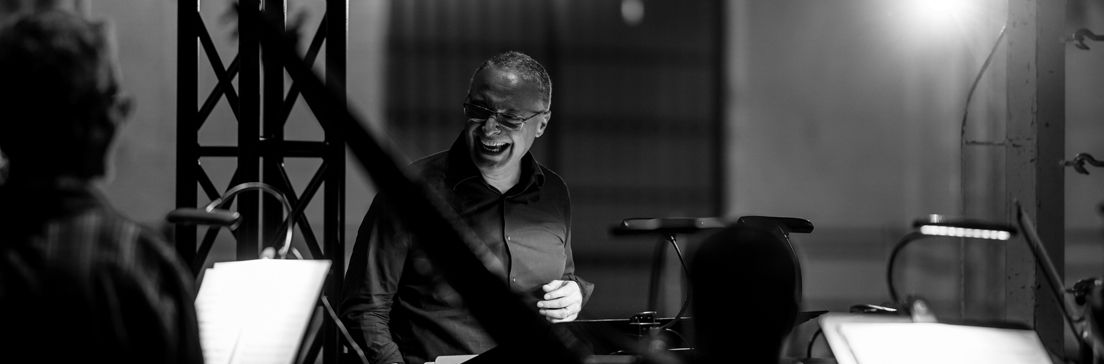
Fausto Nardi

Born in Florence, Fausto Nardi studied piano, composition and conducting at the conservatory in his hometown and at the Hochschule für Musik Hanns Eisler in Berlin. His international career began as assistant to Claudio Abbado at the Lucerne Festival (2005/06), where he participated in notable projects such as tours with the Lucerne Festival Orchestra and recordings of Mozart's The Magic Flute with the Mahler Chamber Orchestra.

Between 2005 and 2013, he worked regularly as an assistant director at the Gran Teatre del Liceu in Barcelona, collaborating on productions such as The Marriage of Figaro, Don Giovanni, Linda di Chamounix, La clemenza di Tito, Idomeneo and Lohengrin. He was also an assistant at the Korean National Opera in Seoul for Falstaff.

He made his debut as an opera director in Germany in 2005 with Piccinni's La Cecchina in Rheinsberg. Since then, he has conducted baroque and classical operas in festivals and theatres across Europe, such as Handel's Rinaldo (Karlsruhe Handel Festival, 2010), a production that earned him an invitation from the Dortmund Opera to conduct Cavalli's L'Eliogabalo (2011) and Monteverdi's L'incoronazione di Poppea (2012).

Subsequently, he has been invited on several occasions by the Castell de Peralada Festival, where he has conducted, among others, Wagner's Das Liebesverbot (2013), broadcast by Radio Nacional de España, and a highly acclaimed production of Monteverdi's madrigals (2016), also presented at the Arriaga Theatre in Bilbao with the group Vespres d'Arnadí (2017) and in Seville with the Seville Baroque Orchestra (2025). At the Youth Opera in Weikersheim, he conducted the JONC Youth Orchestra of Catalonia, performing La Bohème (2019), and the Orchestra dei Filarmonici Friulani in L'elisir d'amore (2023).

He has conducted orchestras like the Dortmund Philharmoniker, the Konzerthausorchester Berlin, the soloists of the Maggio Musicale Fiorentino, the Berliner Symphoniker, the Filharmonia Kameralna Sopot and the Oviedo Filarmonía.

Since 2015, he has been a professor at the Hochschule für Musik und Theater in Hamburg and at the Laboratory of Excellence // Opera® of Jeunesses Musicales Deutschland.


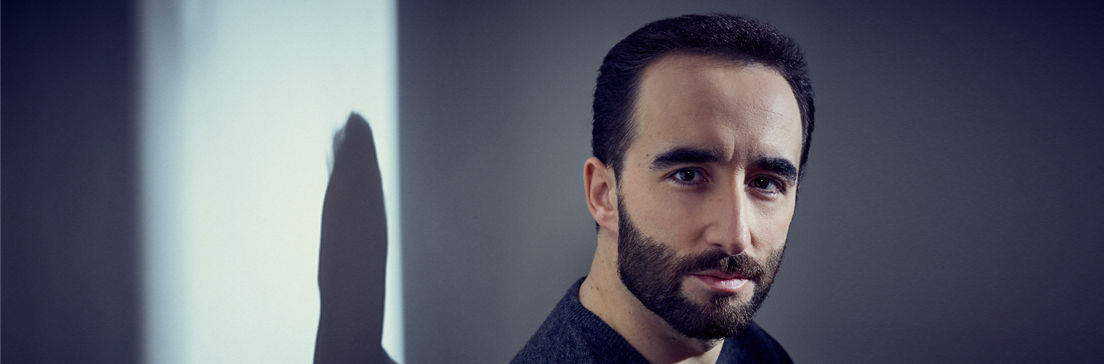
Víctor Sordo

Born in Badajoz, Víctor Sordo began his piano and choral music studies with Guadalupe Rey and Alonso Gómez, respectively. He later moved to Seville, where he studied for the Higher Degree in Choir Conducting with Ricardo Rodríguez.

He completed his choral education with Peter Philips, Owen Rees, Fernando Eldoro, Graham O'Reilly, Marcel Pérès, Tamara Brooks, Marco Berrini and Javier Busto, among others. Vocally, he is self-taught, though he has received advice from artists such as Isabel Álvarez, Miguel Bernal, Bart Vandewege, Lambert Climent, María Coronada, Jan Van Elsacker, Lluís Vilamajó and Kevin Smith.

Specialising in historical singing (pre-19th century), he regularly collaborates as a soloist with some of the best formations on the international scene, such as Le Concert des Nations, Hespèrion XXI, Capella Reial de Catalunya, La Ritirata, Ricercar Consort, The Harp Consort, Les Saqueboutiers de Toulouse, Seville Baroque Orchestra, Vespres d'Arnadí, Trondheim Barokk, Al Ayre Español, Sollazzo Ensemble, Tasto Solo, Barrocade Israeli and Forma Antiqva, directed by Jordi Savall, Kenneth Weiss, Eduardo López Banzo, Enrico Onofri, Aarón Zapico, Andrew Lawrence-King, Philippe Pierlot, Josetxu Obregón, Martin Wahlberg, Anna Danilevskaia, Guillermo Pérez and Daniel Espasa.

He also sings as a soloist with modern orchestras such as the Balearic Islands Symphony Orchestra, the Cadaqués Orchestra, the Madrid Community Orchestra, the ADDA Orchestra, the Extremadura Symphony Orchestra, the Verum Orchestra and the Seville Symphony Orchestra, with conductors including Víctor Pablo Pérez, Pablo Mielgo, Michael Thomas, Fausto Nardi, Amaya Añúa, Manuel Coves and Pedro Halffter, mainly performing opera and oratorio from before the 19th century.

He has also collaborated with prestigious groups such as Collegium Vocale Gent, La Colombina, Arsys Bourgogne, Música Ficta, Barcelona Ars Nova, La Galanía and Ghislieri Consort, working with conductors and ensembles such as Philippe Herreweghe, Jordi Savall, Frans Brüggen, Lluís Vilamajó, Alfredo Bernardini, Jean Tubéry, Giulio Prandi, Pierre Cao, Mireia Barrera, Raúl Mallavibarrena, La Caravaggia, Les Talens Lyriques, La Fenice, Akademie für Alte Musik, Ensemble Zefiro and Le Concert Lorraine, among others. He has performed in the most prestigious festivals and venues in Spain, France, Germany, the United States, the United Kingdom, Mexico, Austria, the Netherlands, Belgium, Italy, Norway, Sweden, Poland, Portugal, Romania, Luxembourg, Switzerland, Slovenia, Croatia, Macedonia, Colombia, Canada and India, among many other countries.

His activity in terms of making albums and appearing on radio and television is consistently intense, with recordings for labels such as Deutsche Grammophon, Sony–Deutsche Harmonia Mundi, Alia Vox, Flora, Pentatone, K617, Ánima e Corpo, Glossa, Vanitas, Enchiriadis, IBS Classical, Brilliant Classics and OBS-Prometeo, as well as collaborations with media such as France Musique, MEZZO, ARTE, NDR, RTVE, RNE, Radio Klara, Polskie Radio and Catalunya Ràdio.

Among his most personal projects is the vocal quartet Vandalia, alongside contralto Sonia Gancedo, which functions both as a recording studio and musical ensemble and carries out a great deal of musical education work through a YouTube channel and social media.

He is also part of the teaching staff of the Andalusia Youth Choir and regularly gives talks and workshops at institutions including UNAM (Mexico City), UAM (Madrid), INDICEX (Extremadura), Antigua Xixón (Asturias), Mare Nostrum (Almería) and Mirabilia (Cuenca).

Francisco Fernández-Rueda · tenor

Blessed with a marked artistic personality and a solid stage presence, tenor Francisco Fernández-Rueda has established himself as one of the most unique voices of his generation in the Baroque and Classical repertoire, with a special affinity for the Italian Seicento and the Mozartian repertoire. His singing, with a full timbre, effortless production and even projection, stands out for its technical assurance and intense expression always at the service of the word.

His international trajectory is now well established following his participation in Le Jardin des Voix, the starting point of a sustained career on the main stages of Europe and North America. The milestones in his career include participation in the Monteverdi 450 project alongside Sir John Eliot Gardiner, the Monteverdi Choir and the English Baroque Soloists, interpreting the trilogy of the composer from Cremona on stages such as the Salzburger Festspiele, the Teatro La Fenice in Venice, the Berliner Philharmonie, the Edinburgh Festival and the Lincoln Center in New York.

Added to this are his interpretations of the roles of Orfeo (L'Orfeo) and Ulisse (Il ritorno d'Ulisse in patria) in productions at the Gran Teatre del Liceu, the Teatro Olímpico de Vicenza, the Grand Théâtre de Genève, the Birgitta Opera Festival in Tallinn and the Monteverdi Festival in Cremona, under conductors of masters such as Iván Fischer, Jean-Christophe Spinosi, Ottavio Dantone, Andrew Lawrence-King and Michele Pasotti. Specialised critics have repeatedly emphasised his vocal authority and expressive depth in his Monteverdian interpretations, pointing to his Possente spirto as a reference reading.

Mozar's repertoire also plays a key role in his artistic activity, with roles such as Don Ottavio (Don Giovanni), Ferrando (Così fan tutte), Tamino (Die Zauberflöte) and Alessandro (Il re pastore). He has also taken on fundamental classical works—such as Mozart's Requiem and Krönungsmesse or the role of Rinaldo in Armida and Haydn's Die Schöpfung—as well as great titles of Baroque oratorio, including Handel's Messiah or the Passions and Mass in B minor by J. S. Bach.

A regular guest as a soloist, he has collaborated with conductors of such international prestige as Sir John Eliot Gardiner, William Christie, Jordi Savall, Iván Fischer, Fabio Luisi, Enrico Onofri, Fabio Biondi, Gianluca Capuano, Federico Maria Sardelli, Raphaël Pichon, Julien Chauvin and Aarón Zapico, and with ensembles such as The English Baroque Soloists, Les Arts Florissants, Budapest Festival Orchestra, Orchestra del Teatro La Fenice, Royal Concertgebouw Orchestra, Haydn Philharmonie, Europa Galante, Accademia Bizantina, Israel Camerata, Le Concert de la Loge, Ensemble Pygmalion, Concerto Köln and the Baroque Orchestra of Seville, performing in venues such as the Philharmonie and the Opéra Comique in Paris, the Teatro Massimo in Palermo, the KKL in Lucerne, the MÜPA in Budapest, the Auditorio Nacional in Madrid, the Brooklyn Academy of Music, the Lincoln Center in New York, the Harris Theater in Chicago and the Kennedy Center in Washington.

On stage, he has worked with directors such as Jean-Marie Villégier, Davide Livermore, Pier Luigi Pizzi, Blanca Li, Mariame Clément, Tanjana Gürbaca, Alessio Pizzech, Giorgio Sangati, Joan Anton Rechi and Paco Azorín.

His discography includes L'Orfeo and Il ritorno d'Ulisse in patria with Sir John Eliot Gardiner and the English Baroque Soloists, Lully's Atys with William Christie and Les Arts Florissants, Handel's Rinaldo with Fabio Luisi and La Scintilla Orchestra, Grétry's L'épreuve villageoise with Ryan Brown and Opera Lafayette, Mozart's concert arias with Arthur Schoonderwoerd and the Cristofori ensemble, as well as Tonos Humanos with Manuel Vilas. He has also recorded for France Musique, the BBC, BR Klassik, SWR, RAI and RNE.

Alongside his operatic activity, he performs well-developed recital work, tackling cycles such as Winterreise and Die schöne Müllerin by Schubert and programmes dedicated to the French, English and Spanish repertoire from a stylistically informed approach.

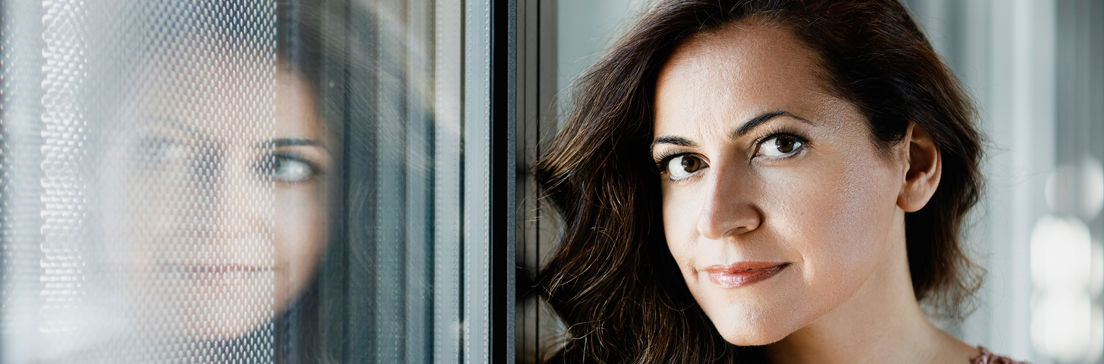
Anna Alàs i Jové · mezzo-soprano

Praised for her 'energetic interpretation and brilliant vocalisation' (Die Deutsche Bühne) and for her 'great dramatic and vocal work' (Ópera Actual), Catalan mezzo-soprano Anna Alàs i Jové has developed a strong international career playing leading roles in the main European theatres and auditoriums.

Committed to a broad artistic spectrum, she has recently added to her repertoire the roles of Carmen in Bizet’s opera and Bradamante in Handel’s Alcina, both received with notable success. Her training has been characterised by a multifaceted approach that embraces the operatic, symphonic and chamber repertoire from the Renaissance to contemporary works.

She studied at the Hochschule für Musik “Hanns Eisler” in Berlin, where she was mentored by Anneliese Fried and Wolfram Rieger and worked with prominent figures such as Brigitte Fassbaender, Dietrich Fischer-Dieskau, Bernarda Fink, Thomas Quasthoff, Thomas Hampson, Cornelius L. Reid, Emma Kirkby, Andrew King, Andrea Marchiol, Raphael Alpermann, Mireia Pintó and María González, among others.

She was awarded First Prize at the Joan Massià Singing Competition (2005) and Second Prize at the Pietro Antonio Cesti Baroque Opera Competition (2010) and the Stuttgart International Singing Competition (2010), together with pianist Alexander Fleischer. She has also received grants from the Alexander von Humboldt Foundation, Caja Madrid and the DAAD.

Throughout her career , among many others, she has played the roles of Carmen, Romeo (I Capuleti ei Montecchi), Angelina (La Cenerentola), Rosina (Il barbiere di Siviglia), Donna Elvira (Don Giovanni), Ottavia (L'incoronazione di Poppea), Cherubino (The Marriage of Figaro), Annio (La clemenza di Tito), Dido (Dido and Aeneas), Diana (La Calisto), Siébel (Faust), L'enfant (L'enfant et les spells) and La Messagtiera (Orfeo), on stages such as the Staatsoper Unter den Linden in Berlin, the opera houses in Cologne, Leipzig and Nuremberg, the Staatstheater Wiesbaden, the Landestheater Linz, the Gran Teatre del Liceu, the Teatro Real, the Teatro Arriaga, the Palacio de la Ópera de la Coruña, the Oviedo Opera or the Bilbao Opera, among many others.

She has worked with conductors of the calibre of Marc Minkowski, Thomas Hengelbrock, Markus Poschner, Lorenzo Passerini, Konrad Junghänel, Corrado Rovaris, David Afkham, Víctor Pablo Pérez and Josep Pons, and with stage directors such as Achim Freyer, Robert Carsen, La Fura dels Baus, Joan Anton Rechi, Lindsay Kemp and David McVicar.

Particularly committed to contemporary works, she has participated in numerous opera premieres and song cycles. At the same time, she has an intense background in the field of early music, performing with ensembles such as the Baroque Orchestra of Ghent, Collegium 1704, Musica Florea, La Chimera, Vespres d'Arnadí, Ensemble Daimonion, the Baroque Orchestra of Seville and Academia 1750, in festivals such as the Innsbrucker Festwochen der Alten Musik, the Musikfestspiele Potsdam, the Davos Festival, the Music Bridge Prague–Dresden, the Torroella de Montgrí Festival, the Castell de Peralada Festival and the Early Music Festival of the Pyrenees.

As a concert and oratorio soloist, she has performed at the Berliner Philharmonie, the Opéra National de Bordeaux, the Konzerthaus in Berlin, the Glinka Hall in Saint Petersburg, the Palau de la Música Catalana, L'Auditori de Barcelona and the Schubertíada de Vilabertran, with ensembles such as the Staatskapelle Weimar, the Staatskapelle Berlin, the Bruckner Orchester Linz, the Nuremberg Philharmonic, the Spanish National Orchestra, the Barcelona Symphony Orchestra, the Galicia Symphony Orchestra or the Euskadiko Orkestra, among others.

She has recorded for broadcasters such as Bayerischer Rundfunk, DeutschlandRadio, Catalunya Música, RNE and Portuguese public television, as well as for record labels such as Naxos and Sony Classical, among others.

Rocío Martínez, soprano

She studied guitar and singing at the Professional Conservatory of Music in Vila-seca, where she obtained the extraordinary singing prize. She completed her higher education at the Barcelona Municipal Conservatory of Music with honors. She later studied vocal technique and interpretation at the University of Minnesota (USA).

She won first prize in the Pro-Mèdic Foundation singing competition, a medal in the Maria Canals international competition and was a finalist in the Manuel Ausensi International Competition.

She has starred in numerous productions, including Così fan tutte (Despina), La serva padrona (Serpina), Die Zauberflöte (Queen of the Night and Papagena), The Tales of Hoffmann (Olympia and Antonia), The Marriage of Figaro (Susanna and Countess), Esponsales (First priestess and Greek woman) alongside the tenor Plácido Domingo, Arbore di Diana (Diana), Don Gil de Alcalá (Niña Estrella), Don Pasquale (Norina), Carmen (Frasquita), L'elisir d'amore (Giannetta), Die Fledermaus (Ida), Orfeo et Euridice (Amore), Das Liebesverbot (Dorella) and Il combattimento (Clorinda).

Of particular note are her performances at the National Auditorium of Spain, the Gran Teatre del Liceu in Barcelona, the Auditorium of Barcelona, the Palau de les Arts in Valencia, the Kursaal Theatre in San Sebastian, the Auditorium of Zaragoza, the Campoamor Theatre in Oviedo, the La Faràndula Theatre in Sabadell, the Bellini Theatre in Catania, the La Llotja Theatre in Lleida, the Josep Carreras Auditorium in Vila-seca (Tarragona), the Teatro de la Maestranza, the Príncipe d'Asturias Auditorium in Oviedo and the Auditorium de l'Escorial in Madrid, as well as in the cities of Sant Genís de Fontaines and Nice (France), Zagreb (Croatia), Santa Barbara and Los Angeles.

She has sung as a soloist with Plácido Domingo, Erwin Schrott, Francisco Meli, Riccardo Zanellato, Carlos Álvarez, Leonardo Caimi and Manuel Ausensi.

Her vocal and musical qualities allow her to approach oratory, lieder and song with excellence. She completed a master's degree at the Liceu Conservatory focusing on chanson française. In recent years she has also specialised in the performance of contemporary opera.

In the field of oratorio and cantata, she often interprets Handel's Messiah and Carmina Burana. Her interpretation of Poulenc's Gloria also stands out.

She has worked with prestigious directors, including Lorin Maazel, Dimitri Jurowski, Patrick Fournillier, Josep Pons, Edmon Colomer, Miguel Ortega, Robert Ricci Brignoli, Sergio Monterisi, Salvador Brotons and Kynan Johns, among others.

Supported by:

Sponsored by:

Organised by: